
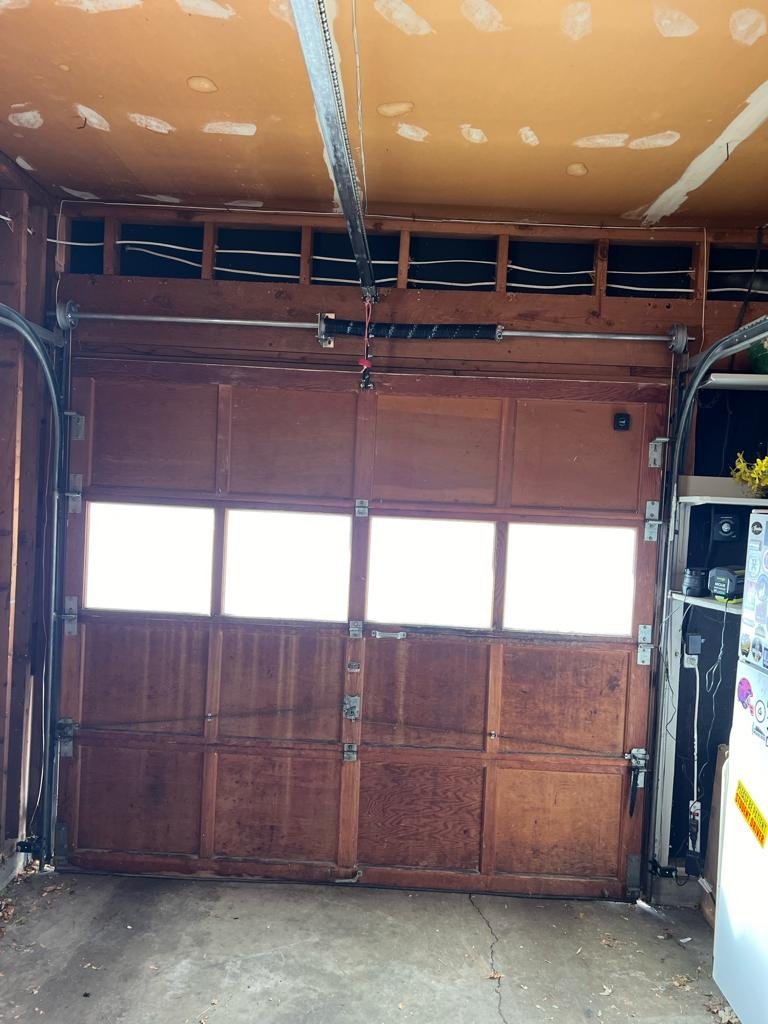
Garage door symptoms often overlap. A door that will not open may have an opener fault, but it may also be too heavy because of a broken spring. A door that reverses may have blocked photo eyes, resistance in the track or incorrect travel behavior.
Start with what you can observe without entering the path of the door. Note the sound, direction, position and whether the wall control and remote behave differently. Stop immediately when the door is crooked or damaged.
The garage door will not open
Check whether the opener has power and whether the wall control responds. If the motor runs but the door barely moves, stop repeated attempts. A broken spring, disconnected trolley or binding door may be involved.
A visible spring gap, slack cable or unusually heavy door requires professional service. The opener should not be used to overcome a counterbalance failure.
The door starts down and reverses
Remove obvious objects from the opening and gently clean the photo-eye lenses. Look for indicator lights that differ between sensors, but do not alter wiring or force settings without the manufacturer procedure.
If the sensor path is clear, mechanical resistance, alignment or travel settings may require diagnosis. Reversal is a safety behavior and should not be defeated.
The door is noisy or shakes
New squealing, grinding, popping or rattling can point to rollers, hinges, fasteners, bearings, springs or opener drive components. The location and timing of the sound help distinguish them.
Do not spray a general lubricant over every part. Tracks should remain clean, and springs, cables and bottom fixtures should not be adjusted by homeowners.
The door is crooked or off track
Uneven lifting may involve a cable, drum, spring or track problem. An impact can bend track or damage a section. Continuing operation may pull rollers out and make the door less stable.
Keep clear, stop using the opener and do not try to push the door back into the track. Tell the service company the door position and whether access is blocked.
The remote or keypad does not work
Try a fresh battery and compare the remote with the hardwired wall control. If only one accessory fails, programming or compatibility may be the issue. If every control fails, power, lock mode or the opener itself may be involved.
For connected openers, also check local internet status and the app account. Do not erase all programming unless you have the model-specific instructions and know how each user will be restored.
The door closes unevenly or leaves a gap
A damaged bottom seal can create a visible gap, but an uneven gap may also reflect floor slope, section alignment, cable tension or track issues. The correct solution depends on whether the door itself remains square.
A technician can separate weather-seal work from mechanical alignment and explain whether a repair, adjustment or replacement is appropriate.
When to stop troubleshooting
Stop when the door is unstable, a spring is separated, a cable is loose, a roller has left the track or movement requires force. Keep people, pets and vehicles away from the opening.
Pine Garage Door of Westminster can inspect the door, hardware and opener together. A system-level diagnosis is the best way to avoid repairing the wrong symptom.
- Do not touch springs, cables or bottom brackets.
- Do not increase opener force to push through resistance.
- Do not stand under a damaged or partially open door.
- Call when safety or door stability is uncertain.