
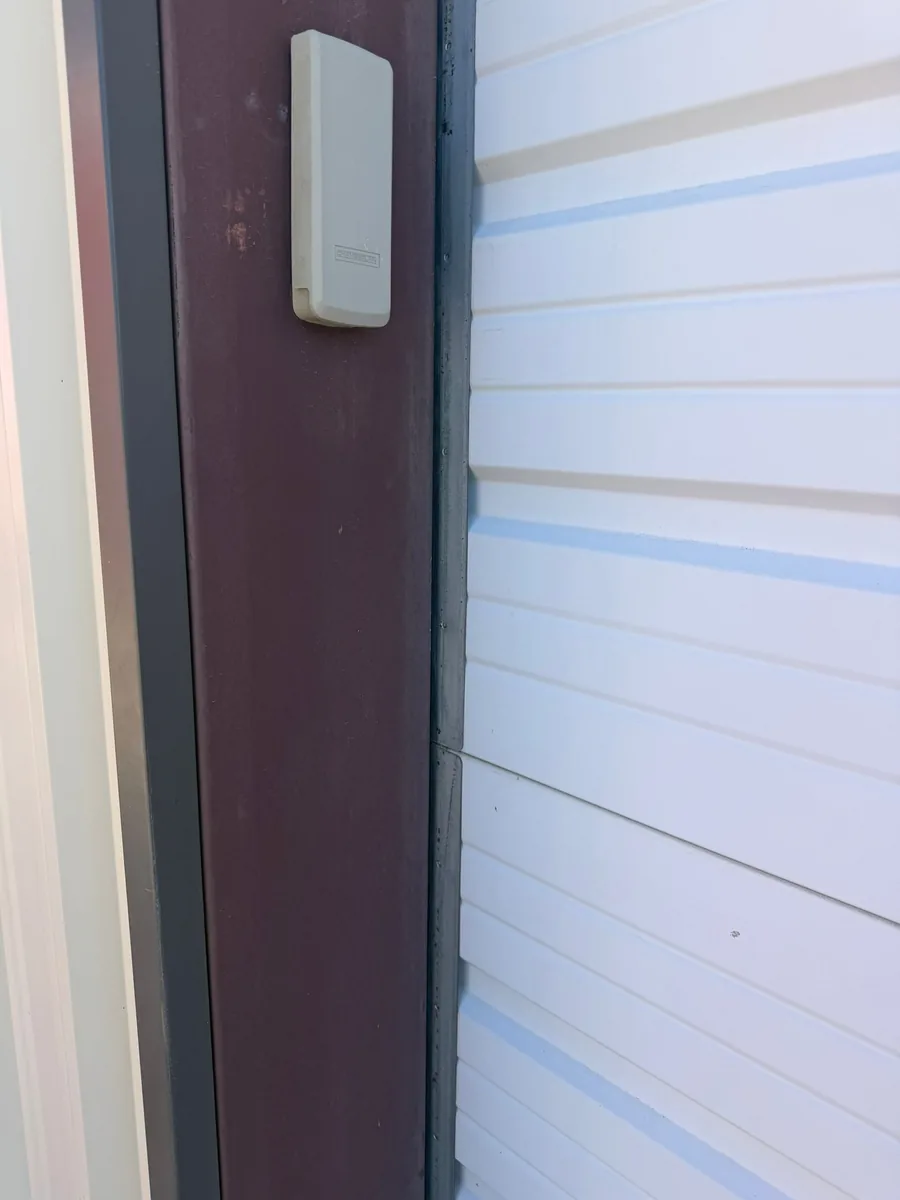
Garage door weatherstripping is a group of seals, not one universal part. A flexible bottom seal closes the space at the floor, while perimeter weatherstrip meets the outside face of the door along the sides and header. Some doors also use seals between sections or around windows.
In Westminster, sun exposure, wind, temperature changes and ordinary door movement can harden or flatten these materials. A visible gap may be a seal problem, but it can also reveal an uneven floor, a damaged section or a door that is no longer square. Identify the cause before buying replacement material.
Start with a daylight and contact check
Close the door and look from inside the garage during daylight. Note where light appears, whether the gap is consistent and whether the bottom edge touches the floor evenly. Then inspect the outside perimeter without standing in the path of the door.
A narrow, even line of light may point to a worn seal. A wedge-shaped gap, crooked section or loose cable can indicate a mechanical condition that weatherstripping alone will not correct. Stop operating a visibly uneven door and request an inspection.
Know the job of the bottom seal
The bottom seal compresses against the floor when the door closes. Common profiles slide into a metal or plastic retainer, but the channel shape and width vary. The replacement must fit the existing retainer and remain flexible enough to compress without preventing full closure.
A seal that is split, brittle, permanently flat or pulling out of the channel is usually ready for replacement. Inspect the retainer as well. A bent or corroded retainer can keep a new seal from seating correctly.
- Photograph the end of the retainer from a safe position.
- Measure the door width and identify the seal profile before ordering.
- Do not adjust opener force to crush an oversized seal against the floor.
Check the side and top weatherstrip
Perimeter weatherstrip is mounted around the exterior opening and lightly contacts the face of the closed door. It should form a continuous seal without folding sharply, catching a section or pushing the door sideways.
Loose fasteners, cracked vinyl and gaps at the corners are common failure points. Replacement pieces should follow the opening and meet cleanly at the top corners. Paint and trim work should not make the flexible edge rigid.
Separate seal wear from door alignment problems
New weatherstripping cannot make a crooked door square. If one side sits higher, rollers bind, a section is bent or a cable has lost tension, the mechanical system needs attention first. Installing a thicker seal to hide the gap can create more resistance and strain the opener.
A technician can check the floor, opening, tracks, sections, cables and balance before recommending seal work. When the door is mechanically sound, the seal can be selected for the actual retainer and gap.
Choose practical protection for an attached garage
Weatherstripping can reduce drafts, dust and water entry, but it does not turn an unconditioned garage into finished living space. Comfort also depends on the door insulation, walls, ceiling, windows and the connection between the garage and home.
For an attached garage, combine sound seals with a door that closes fully and evenly. If the door sections are damaged or uninsulated, compare focused seal replacement with the longer-term benefits and cost of a correctly fitted replacement door.
When to schedule garage door service
Request service when the gap changes as the door moves, the door rubs the perimeter, the bottom retainer is damaged or the door no longer sits level. Those symptoms involve more than the flexible seal.
Pine Garage Door of Westminster can inspect the door and opening, explain whether weatherstripping is the complete solution and address related repair or installation needs.