
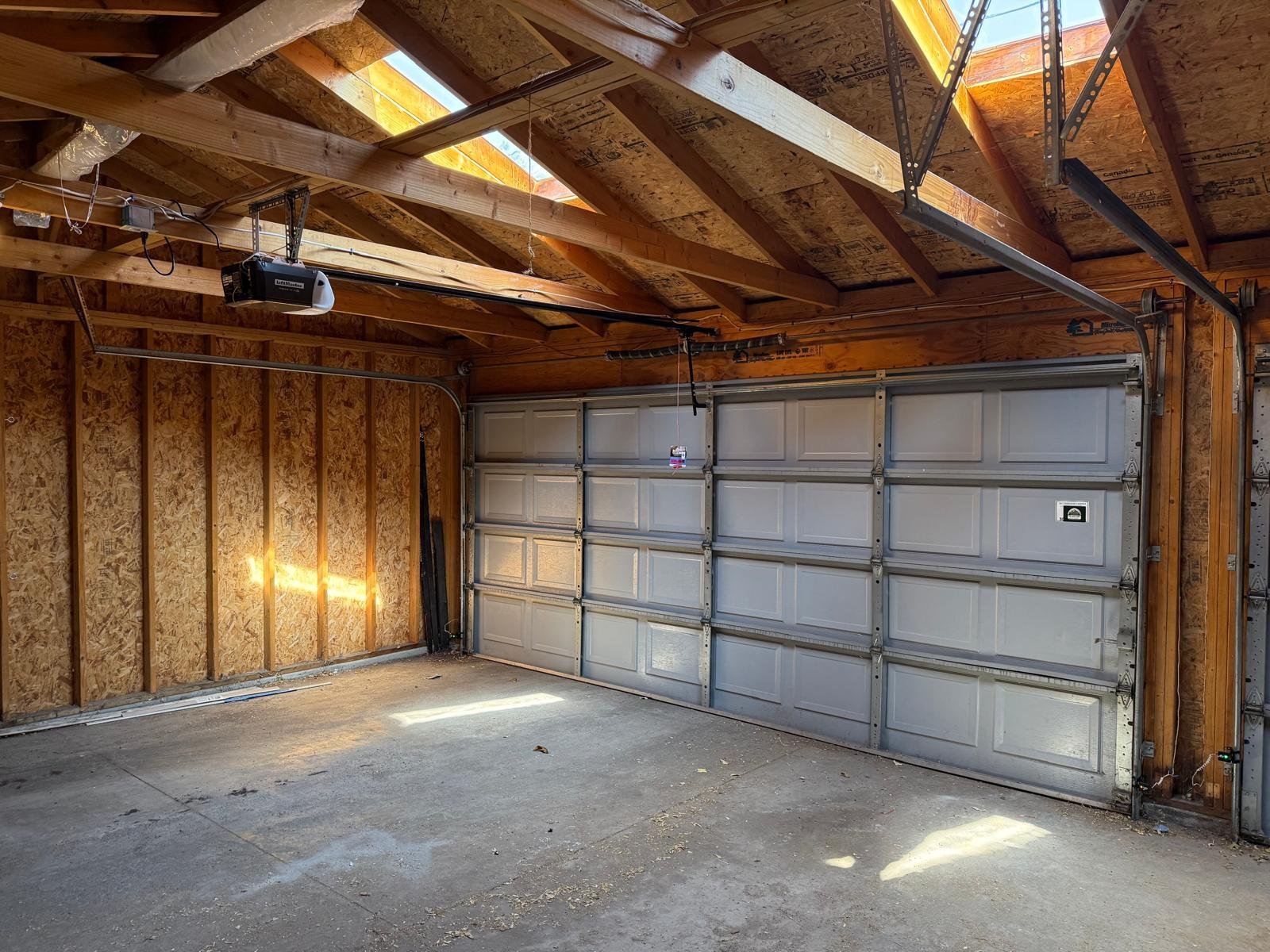
A residential garage door does not need to race, but a noticeable change in speed deserves attention. If the door used to move smoothly and now hesitates, strains or takes much longer, continuing to press the remote can add stress to the opener and door hardware.
The safest first step is observation. Listen for a new grinding or squealing sound, watch whether the door stays level, and note where the slowdown begins. Do not touch springs, cables or hardware under tension. The patterns below can help you describe the problem when requesting service.
1. The door has become heavy or unbalanced
The opener is designed to move a door that is counterbalanced by springs. When a spring breaks or loses strength, the opener may slow, stop or reverse because it is trying to lift more weight than intended.
A visible gap in a torsion spring, slack cable or door that rises unevenly is a stop-use condition. Do not test a heavy door repeatedly. Keep clear and request a spring and balance inspection.
2. Rollers, hinges or tracks are creating resistance
Worn rollers, damaged hinges, loose fasteners or a bent track can make the door drag through part of its travel. Dirt at the track may be visible, but the track is not meant to be packed with heavy grease because that can collect more debris.
Watch from a safe distance for vibration, rubbing or a roller that no longer follows the track correctly. A door that is crooked or out of the track should not be moved.
3. The opener drive or controls need service
Chain, belt and screw-drive systems can develop wear, poor adjustment or internal faults. A motor may run while the trolley moves inconsistently, or the unit may pause because it senses excess resistance.
Changing force settings without identifying the cause can defeat an important warning. A technician should first verify the door mechanically, then inspect the rail, trolley, drive components and opener settings.
4. Cold weather has exposed an existing weakness
Westminster temperature changes can affect lubricants, seals and components that were already worn or marginally adjusted. Cold weather does not usually explain a sudden severe imbalance by itself, so a seasonal slowdown still deserves a full check.
Use only a product intended for the specific garage door component, and follow the door or opener manufacturer guidance. Never lubricate or adjust a loaded spring as a homeowner maintenance task.
Safe checks before you call
Confirm that nothing blocks the door or photo eyes, replace a remote battery if the wall control works normally, and note whether every control produces the same behavior. Clear stored items from the work area only when the door is stable.
Share the opener brand, the position where movement slows and any recent impact or power issue. Those details help separate a control problem from a mechanical one.
- Stop if the door is crooked, extremely heavy or has a loose cable.
- Do not increase force settings to push through resistance.
- Keep people and vehicles away from an unreliable door.
- Request an inspection when the change is persistent or worsening.
Repair the cause, then verify the complete system
A useful repair ends with more than normal speed. The door should remain balanced, travel without binding, stop at the correct positions and reverse when the safety system requires it.
Pine Garage Door of Westminster can inspect both the door and the opener so the recommendation addresses the source of the slowdown.