
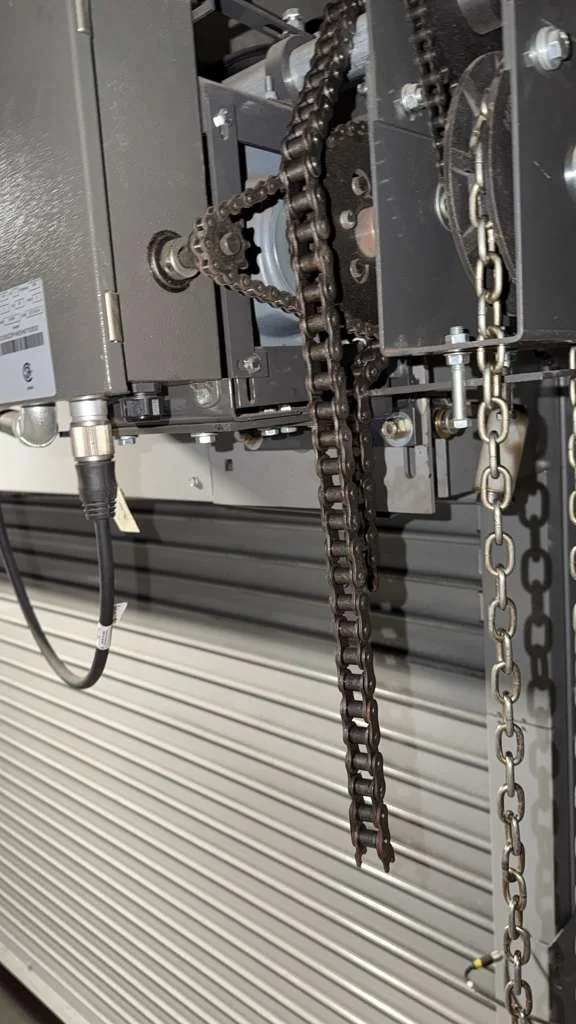
Every garage door makes some sound as panels bend through the track and the opener moves the trolley. What matters is a change: a new scrape in one location, a pop under load, a grinding opener or vibration that was not present before.
Operate the door only when it remains level and stable. Listen from a safe position and note whether the sound happens at startup, through the curved track, near the floor or inside the opener. Do not touch springs, cables or bottom fixtures while troubleshooting.
Squeaking often points to dry or worn pivot points
Hinges, rollers and bearings move every time the door cycles. A light squeak may indicate a manufacturer-approved lubrication point, but a worn roller or loose hinge can make a similar sound. Look for visible wear or movement without placing fingers near joints.
Use only a product and method appropriate for the specific component. Heavy grease in the track attracts debris and can hide binding rather than correct it. Springs and cables are not homeowner adjustment points.
Grinding can come from rollers, track or the opener
A metal-on-metal grind near one side may involve a damaged roller, bent track or loose hardware. Grinding above the center of the garage may come from the opener rail, trolley, drive gear, chain or belt system.
Do not increase opener force to push through resistance. First confirm that the door is mechanically sound and balanced, then inspect the operator. An opener should guide a balanced door rather than overpower a binding one.
Popping or banging deserves closer attention
A panel can pop as it flexes, a hinge can move at a loose attachment point, or loaded spring components can create a sharp sound. A sudden loud bang followed by a door that will not lift may indicate a broken spring.
Look from a distance for a visible gap in a torsion spring, slack cable or tilted door. If any of those signs are present, stop using the opener and keep people and vehicles clear of the opening.
Rattling usually needs a systematic hardware check
Vibration can travel through the door, track supports and opener mounting, so the loudest location is not always the source. Loose non-spring fasteners, worn rollers and an opener rail can all contribute.
A professional inspection checks the sections, hinges, rollers, track supports, counterbalance and opener together. That prevents one adjustment from masking wear elsewhere in the system.
- Note the exact point in the travel where the sound begins.
- Compare wall control and remote operation without repeated cycling.
- Stop immediately if the door becomes crooked, jerks or leaves the track.
Cold and wind can expose an existing weakness
Westminster temperature changes can stiffen old seals or make an already marginal component more noticeable. Wind can also move a loose perimeter seal or rattle a section. Weather may reveal the symptom without being the root mechanical cause.
Inspect weatherstrip for contact and debris, but do not assume seasonal noise is harmless. A persistent change in sound, speed or balance should be evaluated before additional wear develops.
When noise becomes a repair warning
Call for service when noise is accompanied by uneven movement, a heavy door, loose cable, visible spring separation, damaged panel or repeated opener reversal. Those conditions can worsen if the door continues to cycle.
Pine Garage Door of Westminster can diagnose the door and opener as one system and explain whether the solution is maintenance, focused repair or replacement of a worn component.