
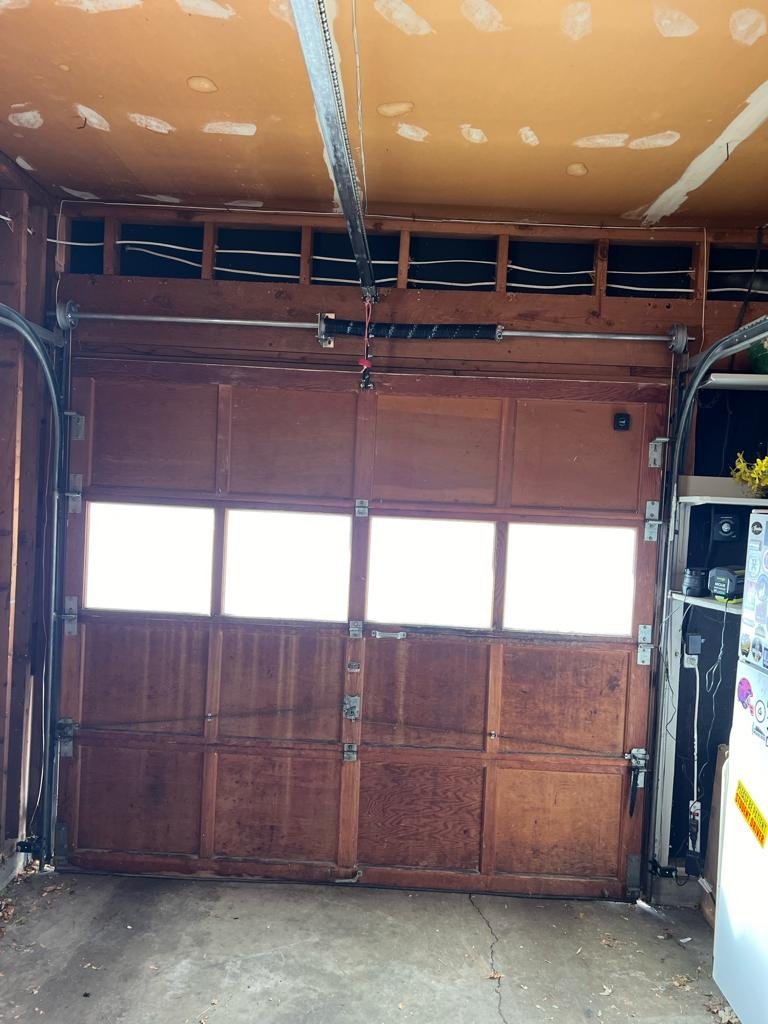
Garage doors rely on two connected systems. Springs and cables counterbalance the door weight, while the automatic opener guides a balanced door through its travel. When the door stops moving, testing the opener repeatedly can make a mechanical failure worse.
Use the observations below to describe the problem from a safe position. Do not touch springs, cables, drums or bottom brackets, and do not pull the emergency release while an open or crooked door is unstable.
First decide whether the door is stable
Keep the door in place and stop using the controls if it hangs crooked, has left the track, has a loose cable or shows a visible gap in a torsion spring. A partially open door can move suddenly when the counterbalance system is damaged. Keep people, pets and vehicles clear of the opening.
If the door is closed and appears square, note what happens when the wall control is pressed. Sound, light patterns and the amount of movement can help separate a control issue from a heavy or binding door, but they are not a reason to force the system.
- A visible spring gap or slack cable means stop operation.
- A roller outside the track or a folded panel needs professional stabilization.
- An opener that strains or stops after a few inches may be reacting to door weight or resistance.
- A door that moves smoothly but ignores one control may have a remote, keypad or programming issue.
A broken or weakened spring can make the door too heavy
The spring system carries most of the door weight. When a spring breaks, the opener may lift the door only a few inches, stop under load or make a new loud sound. The operator is not designed to replace the counterbalance system, so repeated attempts can damage the opener or allow the door to move unevenly.
Spring selection depends on the actual door weight, height and hardware configuration. Do not loosen set screws or try to wind a spring. Review our Westminster garage door spring page for additional stop-use signs and request an inspection.
Loose cables, track resistance and damaged sections also matter
Cables transfer spring force through the lifting system. A cable that is loose, frayed or off the drum can leave one side unsupported. Track damage, worn rollers, loose hinges or a sharply creased section can also create resistance that the opener cannot safely overcome.
Do not push an off-track roller into place or handle a loose cable. A complete repair check includes the door sections, rollers, tracks, hinges, springs, cables and attachment points so that one visible symptom is not treated in isolation.
Check the controls only when the physical door looks stable
Confirm that the opener has power and that the wall control is not in a lock mode described by the manufacturer. Try the hardwired wall control before assuming every remote has failed. If one remote or keypad is the only device that does not work, its battery, programming or compatibility may be the issue.
Do not open the operator housing or bypass a safety device. Diagnostic lights and error codes vary by brand and model. Record the pattern, opener model and which controls still respond so a technician can narrow the test path.
Be careful with the emergency release
The manual release disconnects the opener from the door; it does not make a heavy or damaged door safe. Pulling it while the door is open and unbalanced can allow the door to fall. Use the manufacturer instructions only when the door is closed, stable and safe to operate manually.
If a vehicle is trapped, explain the door position when calling for service. Do not stand beneath the door or attempt to lift a crooked system. The technician can plan how to secure the opening before diagnosis begins.
What the service visit should determine
A useful diagnosis separates counterbalance problems, mechanical resistance and opener faults. The inspection should identify why the movement stopped, which related components were checked and whether a focused repair can restore safe operation.
Pine Garage Door of Westminster can inspect the complete system and explain the repair or replacement choices. Call (720) 897-5639 or use the service form with the door position, symptoms and service address.