
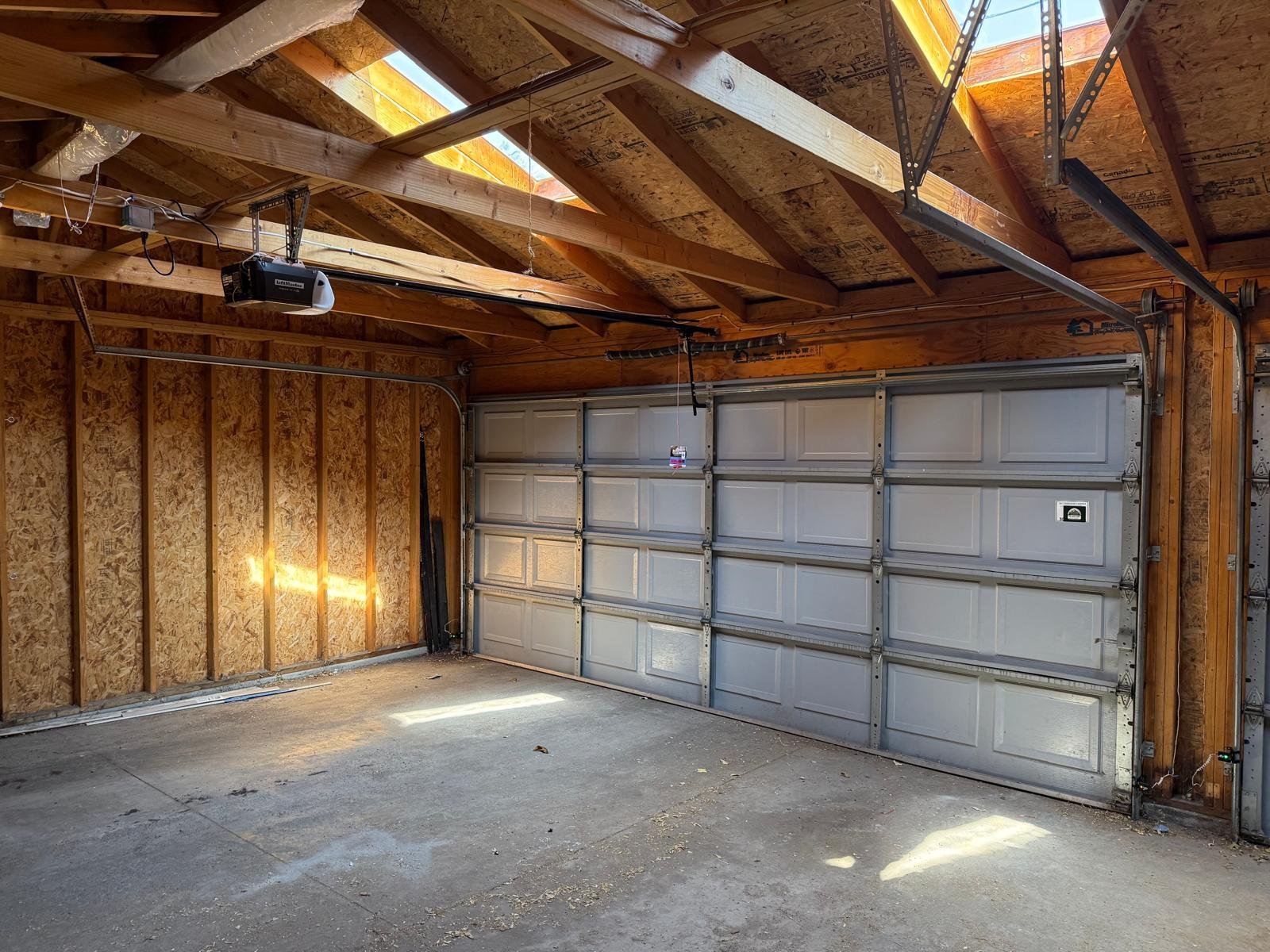
Most modern residential openers use two photo-eye units mounted near the floor, one on each side of the opening. When an object interrupts the beam or a sensor loses alignment, the opener may refuse to close the door or may reverse after closing begins.
A sensor symptom can also be caused by wiring, mounting, sunlight, opener settings or mechanical resistance in the door. The checks below are limited to safe observation and light cleaning. They do not involve bypassing a safety device or adjusting springs, cables or force settings.
Recognize the common sensor pattern
A door that opens normally but will not close from a remote may have an interrupted safety circuit. Some systems close only while the hardwired wall control is held, and many openers flash a light or display a diagnostic code. Exact behavior varies by brand and model, so the owner manual remains the correct reference.
Watch the door from outside its travel path. If it becomes crooked, binds in the track or reverses at the same physical point each time, stop testing. Those patterns may indicate a door or track problem rather than a simple photo-eye issue.
Clear the opening and clean the lenses
Remove boxes, tools, leaves and other objects from the beam path. A spiderweb or film on a lens can also interfere with the signal. With the door stationary, gently wipe each lens with a soft dry cloth and avoid moving the brackets.
Do not tape over a sensor, aim it away from the opening or hold the wall control as a permanent workaround. The safety system is intended to help prevent entrapment, and a persistent fault needs diagnosis before normal automatic operation resumes.
Look for alignment and mounting clues
The two sensors should face each other at the height and position specified by the opener manufacturer. A bumped bracket, vibration or a loose fastener can move one unit enough to interrupt the beam. Indicator lights may show alignment, power or a wiring fault, but their colors and patterns are model-specific.
From a safe position, note whether both lights are on, off, dim or blinking. Do not place hands near the moving door to watch them during operation. If a bracket is bent, wiring is damaged or the indicator will not stabilize, arrange service.
Consider sunlight, moisture and wiring
Direct sunlight at a low angle can sometimes affect an exposed receiving sensor, while water, corrosion or a damaged wire can create an intermittent connection. A problem that occurs only at a particular time of day or after moisture exposure is useful diagnostic information.
Do not splice, short or bypass the sensor wiring to test the opener. Record the timing, indicator pattern and recent changes around the garage. A technician can then check power, wiring continuity, sensor compatibility and mounting without defeating the safety circuit.
Separate sensor faults from mechanical resistance
The opener may also reverse when the door meets resistance or the travel settings are incorrect. Check for an obvious object in the track only while the door is stationary. Do not increase closing force to overcome rubbing, a bent track or a door that no longer sits square.
A complete inspection verifies that the door is balanced, rollers follow the tracks, sections remain aligned and the opener stops and reverses according to its instructions. The automatic operator should guide a sound door rather than force a mechanical problem.
- Stop if a cable is loose or a spring has a visible gap.
- Keep children, pets and vehicles away during testing.
- Use the manufacturer procedure for reversal testing.
- Disconnect an unsafe opener until it is repaired or replaced.
When to call for garage door opener service
Request service when cleaning and clearing the path do not restore normal operation, when sensor lights remain inconsistent, or when the door also moves unevenly, binds or becomes unusually heavy. The sensor, opener and door should be evaluated together.
Pine Garage Door of Westminster can inspect the photo eyes, wiring, opener controls and mechanical door system, then test travel and safety response after the approved repair.