
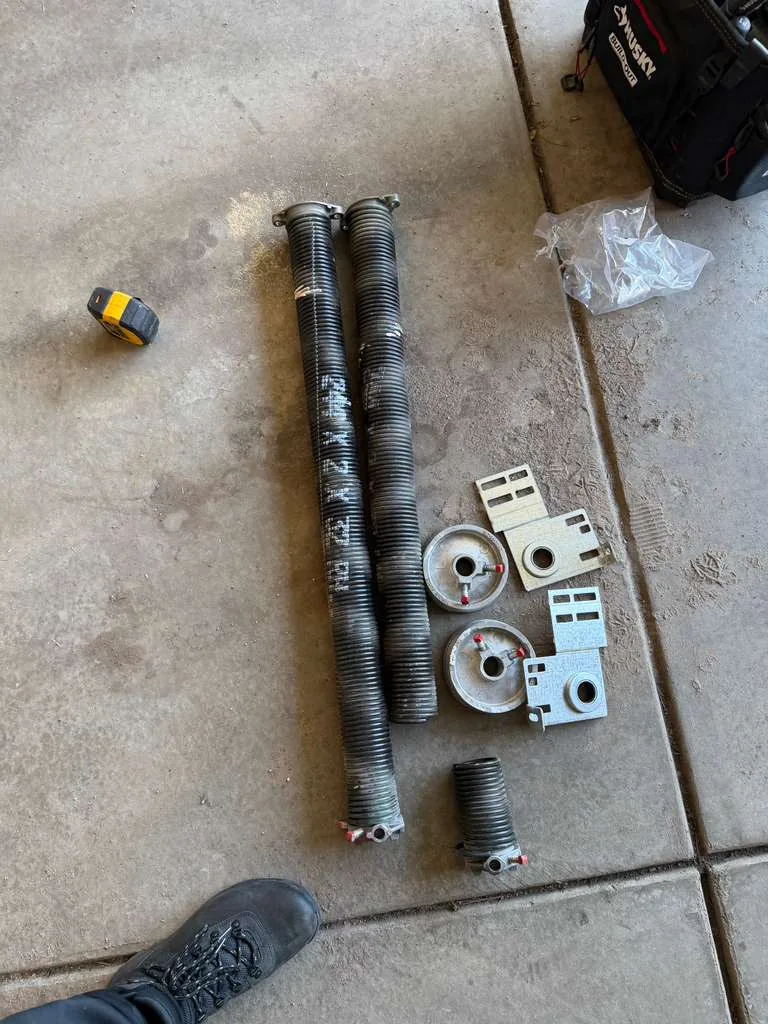
A typical residential garage door may weigh far more than it feels during normal use. Springs carry most of that load so a properly balanced door can move with controlled effort and the opener can guide it rather than lift dead weight.
Because springs store mechanical energy, inspection is mainly visual for a homeowner. Winding, stretching, clamping or loosening spring-related hardware can cause sudden movement and serious injury.
Torsion and extension spring systems
Torsion springs are commonly mounted on a shaft above the door and transfer force through drums and cables. Extension springs are generally positioned along the horizontal tracks and stretch as the door closes. Each design uses different hardware and service procedures.
The system type does not determine the replacement part by itself. Door weight, height, track configuration and expected cycle requirements all influence correct spring selection.
What proper counterbalance looks like
A balanced door should travel evenly and should not depend on excessive opener force. The cables should remain properly seated and the sections should stay square in the track.
Balance testing requires the door to be in a safe condition. If a spring is visibly broken, a cable is loose or the door is crooked, do not disconnect or move it for a test.
Common warning signs of spring trouble
A gap in a torsion spring coil is a familiar sign of breakage. Other signs include a door that opens only a few inches, a loud sound from the garage, unusually heavy manual movement, uneven lifting or an opener that suddenly strains.
Changes can also develop gradually as a spring loses performance or related bearings and cables wear. A system inspection distinguishes those conditions.
- Visible separation in a torsion spring
- Slack or displaced cable
- Door rising unevenly
- Opener straining or stopping during lift
- A door that feels unexpectedly heavy
Why spring size and winding matter
Two springs that look similar can have different wire size, inside diameter, length or wind direction. The correct specification must balance the actual door across its travel.
An incorrect spring can make the door rise, fall, become hard to control or overload other parts. This is why replacement should be based on measurements and door requirements rather than a visual match.
What homeowners should do after a failure
Stop using the opener, keep everyone away from the door and do not handle a loose cable. If the door is open or a vehicle is trapped, tell the service company before anyone attempts movement.
Photographing the spring area from a safe distance may help identify the system, but never climb, remove covers or approach unstable hardware for a better image.
What professional spring service should include
Service should identify the counterbalance system, confirm the door requirements and inspect cables, drums, bearings, supports and attachment points. After approved parts are installed, the door should be balanced and tested through its travel.
The opener should be reconnected only after the door moves safely. A final test should include stopping positions, controls and safety response as appropriate.